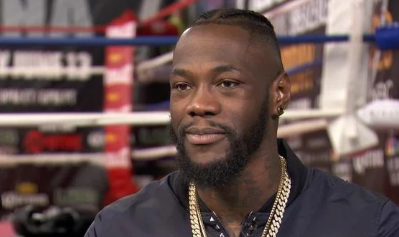
Bronze Bomber’s Legacy: Wilder’s Reign Would Be Defined By One Of The Most Iconic Trilogies In Boxing History Against Tyson Fury.
Few modern heavyweights have electrified the boxing world quite like Deontay Wilder. Known for his terrifying knockout power and explosive charisma, Wilder has carved out a legacy that continues to spark debate, admiration, and controversy within the sport. From his rise as an Olympic medalist to his reign as WBC heavyweight champion, and his epic trilogy with Tyson Fury, Deontay Wilder remains one of the most compelling figures in modern boxing.
Humble Beginnings and a Sudden Rise
Born in Tuscaloosa, Alabama, in 1985, Deontay Leshun Wilder didn’t take the traditional route into boxing. He began his career relatively late, lacing up gloves at the age of 20. Initially motivated by the need to provide for his daughter, who was born with spina bifida, Wilder quickly showed a natural aptitude for the sweet science. His athleticism, paired with his freakish punching power, allowed him to rise quickly through the amateur ranks.
By 2008, just three years after he began boxing, Wilder earned a spot on the U.S. Olympic team and brought home a bronze medal from the Beijing Olympics—America’s only boxing medal in those Games. The achievement earned him the nickname “The Bronze Bomber,” a homage to legendary heavyweight Joe Louis, “The Brown Bomber.”
READ MORE : Anthony Joshua Taunts Parker’s Mum: “No Point Worrying,
A Knockout Artist Like No Other
When Wilder turned pro in 2008, he carried a raw, unpolished style. But what he lacked in technique, he more than made up for with a right hand that could turn off lights with a single touch. Through his first 40 professional bouts, Wilder racked up 39 knockouts, many of them in brutal, highlight-reel fashion.
His resume might have lacked big names early on, but the numbers were staggering. At one point, he had the highest knockout-to-win ratio in heavyweight history. In 2015, he captured the WBC heavyweight title with a decision win over Bermane Stiverne—ironically the only man he hadn’t knocked out at the time. That would change two years later when Wilder obliterated Stiverne in a devastating first-round demolition in their rematch.
The Tyson Fury Trilogy: Glory, Pain, and Redemption
Deontay Wilder’s reign would be defined by one of the most iconic trilogies in boxing history against Tyson Fury. Their first meeting in 2018 ended in a controversial draw—despite Wilder scoring two knockdowns, many observers believed Fury outboxed him for most of the fight. The final round knockdown, where Fury miraculously rose from what looked like a career-ending shot, became an instant legend.
RELATED NEWS : Terence Crawford ranked lower than Canelo Alvarez for
In the rematch in 2020, Fury overpowered Wilder with a relentless assault, stopping him in the seventh round. Wilder suffered his first professional loss and responded with a wave of excuses, including allegations of a “spiked” water bottle and a “heavy” ring costume.
Despite the controversy, Wilder returned for a third fight in 2021—and though he was again stopped, this time in the 11th round, he earned immense respect for his heart and resilience. Both men were knocked down multiple times in what was arguably the greatest heavyweight bout of the 21st century.
Post-Fury Era: Searching for Redemption
Since the Fury trilogy, Wilder has been attempting to reclaim his position among boxing’s elite. In 2022, he returned with a chilling first-round knockout of Robert Helenius—a reminder that his power remains as lethal as ever.
But then came the shock of 2023: a flat, uninspired performance in a loss to Joseph Parker. The bout raised serious questions about Wilder’s motivation, preparation, and whether the wars he endured had finally caught up to him. Rumors swirled about possible retirement. Some speculated he had mentally checked out of the sport, while others believed he was still a major threat if properly focused.
MORE NEWS : Tyson Fury can’t be taken seriously as he backtracks after
What’s Next for The Bronze Bomber?
As of 2025, Wilder’s next move remains a hot topic in boxing circles. There’s been speculation of a clash with fellow knockout artist Zhilei Zhang, or a lucrative showdown with Anthony Joshua—once the most anticipated heavyweight fight in the world.
Wilder has made it clear he wants to fight again—but only if the stakes are high. At 39 years old, he knows the window is closing, but his hunger for legacy may still burn beneath the surface. And in a division where one punch can change everything, Deontay Wilder remains a dangerous presence.
Legacy of Chaos and Power
Regardless of what happens next, Wilder’s legacy is secure. He revitalized the American heavyweight scene, brought an unpredictable energy back to the division, and gave fans unforgettable moments. His knockout power will be remembered in the same breath as Mike Tyson, George Foreman, and Sonny Liston.
But Wilder’s career is more than just knockouts. It’s about overcoming odds, dealing with criticism, showing vulnerability, and always coming back. Love him or loathe him, you cannot ignore Deontay Wilder.
He is, and always will be, The Bronze Bomber.
